





California Storage Unit Tenant Rights: What Renters Need to Know
Renting a storage unit in California comes with legal protections most renters don't know about until something goes wrong. The state has specific laws governing what a storage facility can and cannot do around access, lien sales, auction procedures, and notice requirements. Understanding these rights before a problem arises puts you in a much stronger position if one does.
This guide covers the key provisions of California's Self Service Storage Facility Act and what they mean practically for anyone renting a storage unit in the state.
The California Self Service Storage Facility Act
California's Self Service Storage Facility Act is the primary law governing the relationship between storage facilities and renters in the state. It sets out the legal framework for rental agreements, lien rights, notice requirements, and auction procedures. Both facilities and renters are bound by it, and it supersedes individual lease terms where conflicts exist.
The Act is part of the California Business and Professions Code, and it's worth knowing it exists because facilities are required to follow it to the letter before taking any action against a renter's property. A facility that skips required steps in the lien process can lose its right to sell the contents of a unit entirely.
Your Right to a Written Rental Agreement
California law requires that storage facilities provide renters with a written rental agreement before or at the time of move in. This agreement must clearly state the rental rate, the payment due date, the late fee structure, and the process the facility will follow if payments are missed.
Read the rental agreement before signing. The late fee limits, grace periods, and lien timelines in your specific contract are all legally binding. If a facility's stated process differs from what California law requires, state law takes precedence, but knowing both gives you a clearer picture of what to expect.
Your Right to Notice Before a Lien Sale
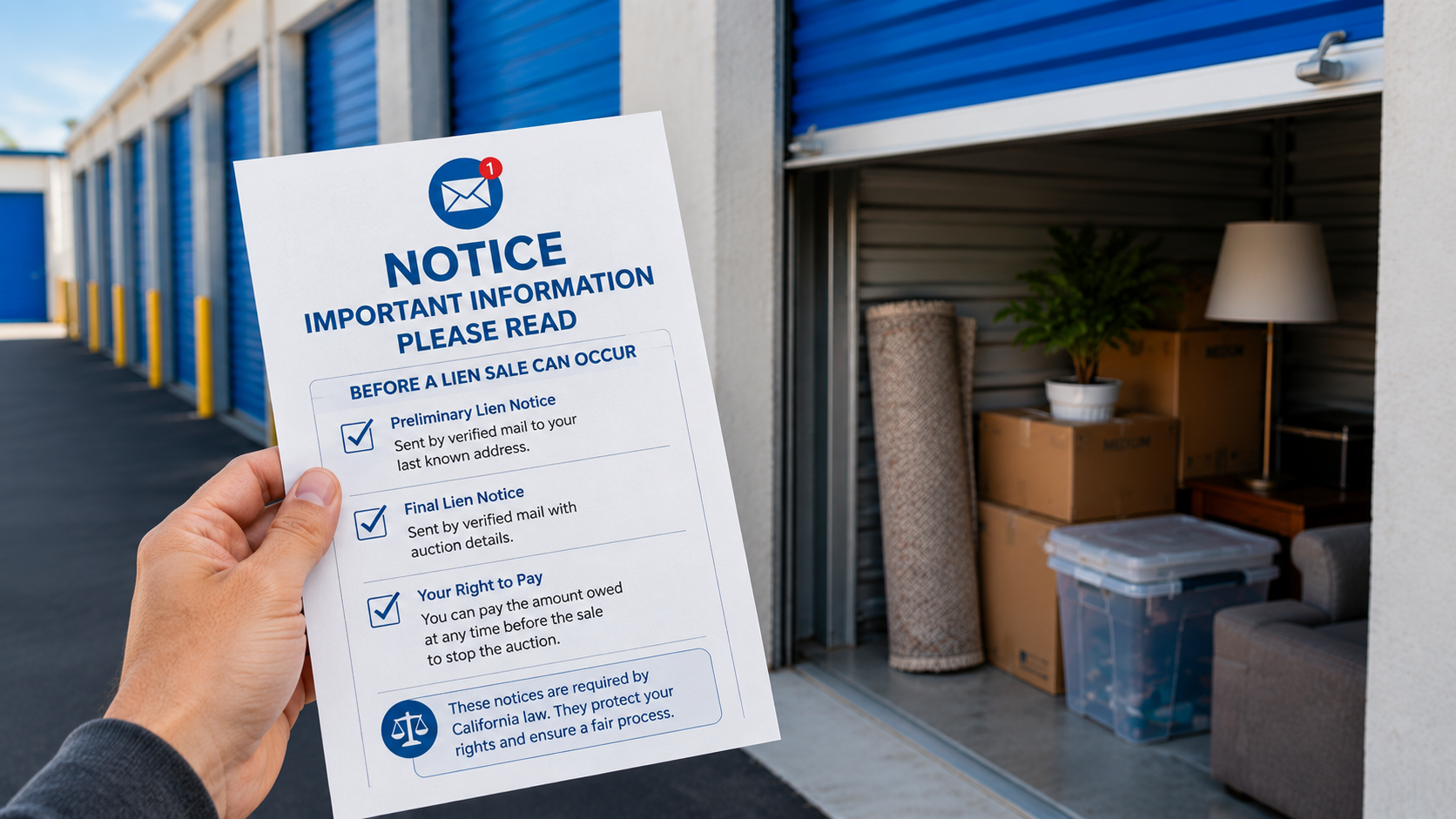
Before a storage facility can sell the contents of your unit, California law requires a specific sequence of notices. These aren't optional steps. They are legal requirements, and failing to follow them properly invalidates the facility's right to proceed with a sale.
Preliminary Lien Notice
The preliminary lien notice must be sent to you by verified mail at your last known address. It must include the total amount owed, a clear statement of the facility's lien rights under California law, a deadline for payment, and information about how to contact the facility to make arrangements.
This notice cannot simply be slipped under your door or sent by regular mail. Verified mail is required.
Final Lien Notice
After the preliminary notice period has passed without payment, the facility must send a final lien notice before scheduling an auction. This notice must again be sent by verified mail and must include the specific date, time, and location of the proposed auction.
You have the right to pay the amount owed and stop the auction at any point before the sale actually takes place.
The 14 Day Threshold in California
One of the most important and most misunderstood aspects of California storage law is how quickly the lien process can begin. Under the California Self Service Storage Facility Act, a facility can begin the lien process after just 14 consecutive days of missed payments. This is significantly shorter than what most renters assume.
That does not mean your belongings can be sold after 14 days. It means the legal clock starts ticking at 14 days. The full notice process, including the preliminary lien notice period and the final notice before auction, adds additional time. But the process starts far earlier than most people expect, which is why acting at the first missed payment, not the second or third, matters enormously.
Your Right to Reclaim Your Belongings Before the Auction
At any point before the auction takes place, even after it's been publicly advertised, you can pay what's owed and stop the sale. Call the facility directly and ask for the exact payoff amount.
Whatever figure they give you, ask them to put it in writing before you hand over any money. Late fees and lien related charges can add up quickly, and you want a clear number confirmed before paying.
Auction Requirements Under California Law
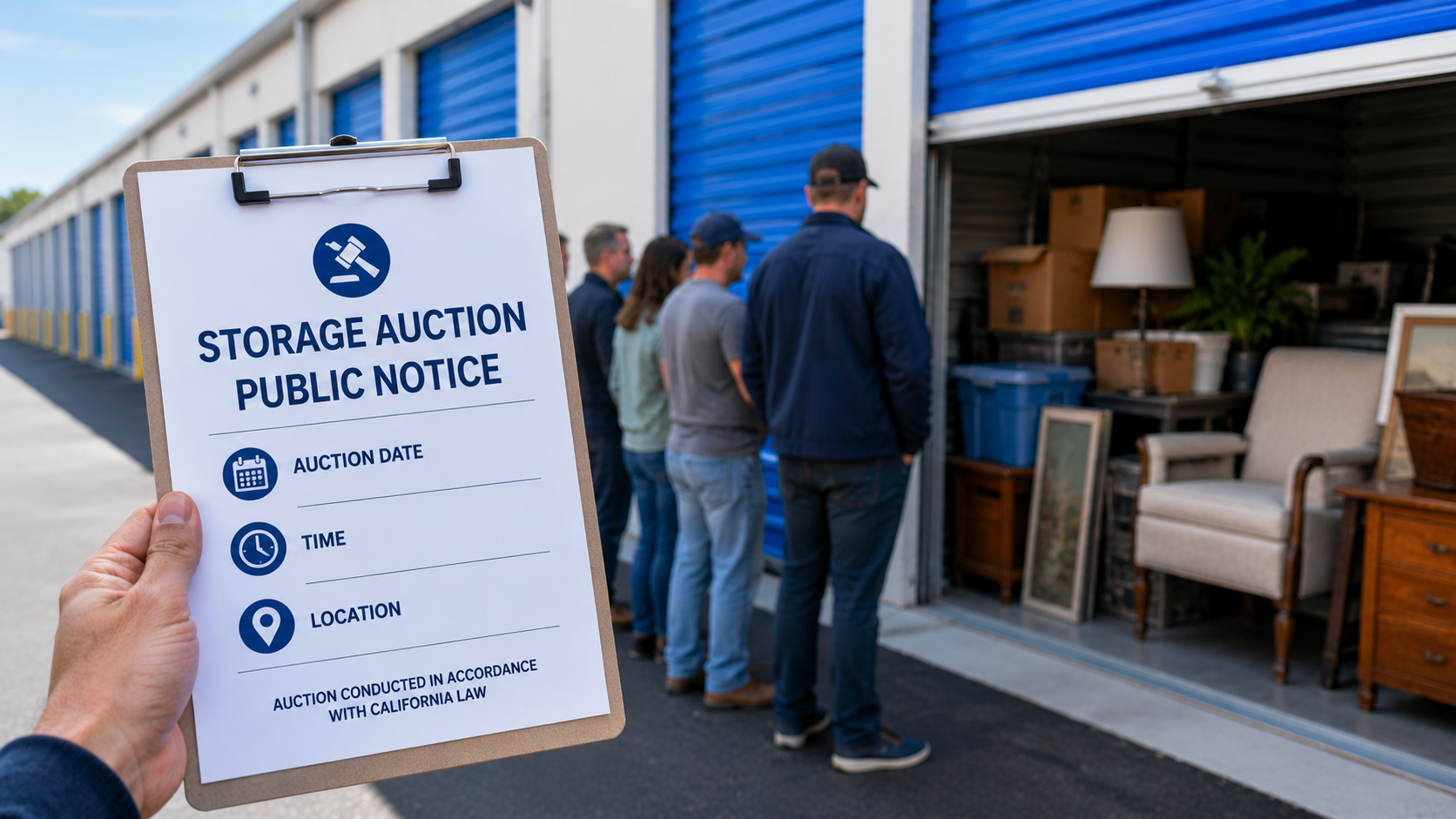
Storage auctions in California can't happen quietly. The law requires public notice before a sale, traditionally through a local newspaper, though online auction platforms have largely taken over that role.
The reason behind this requirement is straightforward. Public advertising drives competitive bidding, which means a better sale price, which means more of the outstanding debt gets covered and a smaller gap remains if the sale doesn't cover everything.
Surplus Funds After an Auction
When a unit sells for more than the renter owed, that difference belongs to the renter, not the facility.
If your unit went to auction, contact the facility afterward and ask whether there's a surplus and what the process is to claim it. That money doesn't disappear. It has to be held and made available to you.
Your Right to Personal Documents and Sensitive Items
Auction buyers purchase whatever is in a unit, but personal documents, photographs, and items with obvious sentimental rather than resale value are a different matter.
California facilities are generally expected to pull those items aside rather than bundle them into the auction lot. If you find out your unit was sold, reaching out to the facility quickly about personal documents is worth doing. They're usually held separately for the former renter.
What Facilities Cannot Do
California law draws a clear line around what a storage facility can actually do when a renter stops paying. They can't just clear out the unit and move on. There's a legal process that has to be followed first, and skipping steps in that process has real consequences for the facility's ability to sell anything legally.
Specifically, a facility cannot:
- Remove and dispose of your belongings outside the lien process
- Sell a unit without completing the proper notice and auction requirements
- Charge fees that aren't in your rental agreement or permitted under state law
- Cut off your access before following the Act's procedures for locking a liened unit
If you believe a facility acted outside those boundaries, skipped a required notice, failed to use verified mail, or sold a unit without proper advertising, the sale may not be legally valid.
A tenant rights attorney or the California Department of Consumer Affairs is the right next step in that situation.
What to Do If You Are Struggling to Pay
Storage facilities generally don't want to run an auction. The process is time consuming, it ties up staff, and it ends a customer relationship permanently.
Most facilities would rather work something out, a short payment plan, a temporary deferral, a partial payment with an agreement to cover the rest, than go through the lien process from start to finish.
Contact the Facility Early
That option is most available early. Calling before a payment is missed, or the day it's due rather than weeks later, keeps the conversation open. Once notices start going out, the facility's options narrow and so do yours.
Get Payment Arrangements in Writing
Whatever arrangement gets made, get it confirmed in writing before making any payment toward it.
StaxUP Storage and California Tenant Protections
StaxUP Storage has locations across Southern California and operates under California's Self Service Storage Facility Act. Rental agreements at each location spell out the specific terms for late payments, lien notices, and how delinquent accounts are handled.
Renters with questions about their lease or what the process looks like at a specific location can contact that facility directly.


