




Why Horse Riding Is So Expensive in Brawley And How Smart Self Storage Cuts the Cost
How Brawley's Weather Can Damage Equestrian Gear:
Brawley sits in one of North America’s hottest basins, and the climate alone bends an equestrian budget. Long-term NOAA normal at the El Centro Naval Air Facility station (the nearest reference) show average July–August highs of about 107.3°F, with roughly 29–30 days at or above 100°F in each of those months conditions that dry out leather, oxidize glues, and fatigue stitching far faster than in coastal climates. Annual precipitation averages barely ~5 inches, which helps explain the constant fine dust riders fight on gear and electronics. In short: the environment is hard on tack, pads, and show accessories, and replacing those items mid-season adds up. NCEI
Dust and Air Quality:
Dust isn’t just a nuisance here; it’s regulated. Imperial County operates under a federally approved redesignation and maintenance plan, which reflects persistent windblown dust pressures in the Imperial Valley Planning Area and lays out controls to hold the national dust standard. For riders, the practical takeaway is simple: fine particulates are part of life, and keeping grit off oiled leather, clippers, helmet liners, and electronics is a cost-control strategy, not just housekeeping. A clean, sealed self-storage setup bins, garment bags, and covers helps you stay ahead of abrasion and residue. Federal Register+1
Local Utility Costs Affects Care:
Water and electricity matter, too. Brawley’s Prop 218 rate schedule uses a base-plus-volumetric structure for metered customers (with phased increases and CPI adjustments since the 2015 action). The city’s own notice spells out the fixed monthly base by meter size and a per-1,000-gallon commodity charge meaning every extra cycle of wash racks, fans, and misters has a measurable price signal. Moving seldom-used or seasonal gear (show trunks, extra pads, winter blankets) into off-site storage keeps it out of the daily cooling/cleaning routine, reducing water and power use, as well as wear. City of Brawley+1
Feed Markets and Gear Longevity:
Feed is the other big variable. Even in an alfalfa-rich region, prices and availability move with exports, trucking, and weather. USDA’s California Direct Hay Report regularly tracks trades and demand (including Imperial Valley notes), a reminder that when markets turn, the cheapest “new” saddle or pad is often the one you don’t have to buy because the old one lasted thanks to better storage. mymarketnews.ams.usda.gov+1
Then there’s the calendar. Brawley’s Cattle Call doesn’t just showcase the Valley it compresses travel, schooling, and logistics into a tight season of PRCA events. Riders who pre-stage a drive-up storage unit near their route can kit the trailer faster: grab the show trunk, cones, spare halters, emergency hardware, and go. No back-tracking for forgotten items, fewer last-minute store runs, and less chance of tossing dusty or sunbaked gear into the rig. City of Brawley
How Self Storage Directly Saves Riders Money:
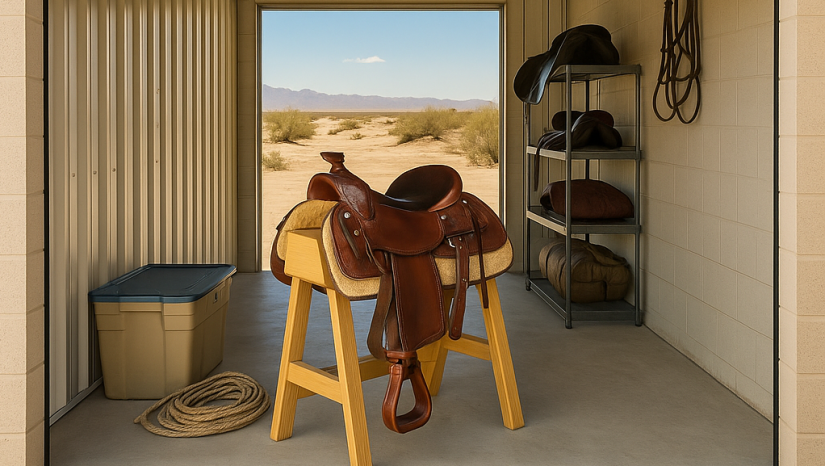
So how does self storage actually save money here? Start with leather science. Conservation authorities recommend stable conditions roughly human-comfort temperatures and relative humidity held around 45–55% to limit embrittlement, mold, and mechanical stress in vegetable-tanned leather. You don’t need a museum vault to get most of the benefit: a small, clean unit, breathable covers, latching bins with desiccant, saddles on stands, and bridles on hooks go a long way. Where climate-controlled storage is available, you’re even closer to those targets, which extends the service life of saddles, bridles, and boots and reduces “surprise” mid-season replacements. (Also skip heavy dressings and saddle soap as routine treatments conservators advise caution.) canada.ca
Tactics for Dust Defense for Riders
Second, fight dust strategically. Keep pads and apparel in garment bags; store electronics (clippers, headlamps, radios) in gasketed bins; use a lightweight dust cover over the saddle stack; and stage a “clean-hand zone” inside the unit for glove-on loading before big weekends. In an area governed by a dust maintenance plan, minimizing grit that wicks moisture and attracts pollutants preserves finishes and textiles and reduces the time (and supplies) you spend cleaning after every ride. Federal Register
Third, rein in utilities and waste. With Brawley’s base-plus-volumetric water charges, every gallon you don’t use on non-daily gear is real money. Storing lesser-used items off-site avoids extra rinses, fans, and misters on trunks and tack that aren’t going out this week. Over a season especially July through September, when the 100°F-plus days stack up that behavioral shift cuts both utility spend and gear fatigue. City of Brawley+1
Finally, use storage to reduce show-day friction. Pre-packed totes labeled for Cattle Call week, spares (latigo, curb chains, gloves), and a “hardware kit” (quick links, snaps, zip ties, reflective tape) live in the unit one stop, then straight to the arena. In real terms, that’s fewer fuel-burning trips across town, tighter time windows in the heat, and lower odds of last-minute purchases because a part failed in the dust. City of Brawley
Bottom line for Brawley riders:
The Valley’s climate and dust, local utility pricing, and feed markets are structural realities not passing annoyances. You can’t change them, but you can change how your gear lives between rides. Treat a small self-storage unit like a conservation-minded gear room and a seasonal staging bay. Over a year, the life-extension on leather and electronics, the trimmed utility use, and the fewer emergency purchases often outpace the monthly rent especially through the triple-digit months.


